Companion video (YouTube): original English narration, switchable Chinese dubbing, Chinese and English subtitles
The starting point of this series is a teacher of mine. He is always willing to share something with everyone on WeChat Moments.
I am not an expert, nor a professor, just a person who likes science. In the age of artificial intelligence I often feel lost, but I have not given up the things I love.
This series is dedicated to people who are just as lost: to those who dare to face the unknown, to those who walk into the unknown to explore it, and also to those who have never stopped, who keep walking toward their dreams.
And let us also not forget those pioneers.
In 1892, a British lord was weighing nitrogen, and the nitrogen made by two methods differed by one part in a thousand. This episode starts from a letter asking for help that he sent to the journal Nature, then tells why he was weighing gases, how that one part in a thousand was magnified, how two men raced to separate that gas out, and why nobody believed it; then, starting from his two numbers, it works out how much argon there is in the air, and finally comes the two Nobel Prizes of 1904.
A letter asking for help
On September 24, 1892, at a country house in Essex, England, a 49-year-old lord wrote a letter and sent it to the journal Nature.
Its first sentence reads: I am much puzzled by some recent results as to the density of nitrogen. He would be obliged, he said, if any of the journal’s chemical readers could offer suggestions.
He had made nitrogen by two methods, and the two weighed differently, by about one part in a thousand. He wrote that the difference is small in itself, but it lies entirely outside the errors of experiment.
We already saw it in the Zeeman episode: spectral lines broadened by just a tiny amount, and that ended in a Nobel Prize in Physics.
And this time, it was one part in a thousand. Twelve years later, this puzzle of one part in a thousand ended in another Nobel Prize.
Scientific discovery so often begins with someone who will not let go of a tiny error, or of a plain, dull question.
So, back to the beginning: why was a lord weighing nitrogen?
Weighing gases
For years, this lord had been doing something very dull: weighing gases.
Why weigh them? He says so at the very start of his Nobel lecture: for the sake of Prout’s law.
The law says that the atomic weights of many elements stand in simple relation to that of hydrogen.
In 1882, at the British Association for the Advancement of Science, he said that perhaps it was time for the densities of several of the principal gases to be weighed again.
The best figure at the time made oxygen 15.96 times as dense as hydrogen, just short of 16, and that gap seemed to lie within experimental error.
These are the globes used to determine the densities of gases, now in the Science Museum in London, given by his son.
The first ones he ordered could not yet be used. In August 1882 he wrote in a letter that the globes had come, at least twice as heavy as they should have been, and that he feared they could not be used. That, he wrote, is life.
Pump the globe empty and weigh it; fill it with a gas and weigh it again; the difference is the weight of the gas. Same globe, same temperature, same pressure: the heavier gas is the denser.
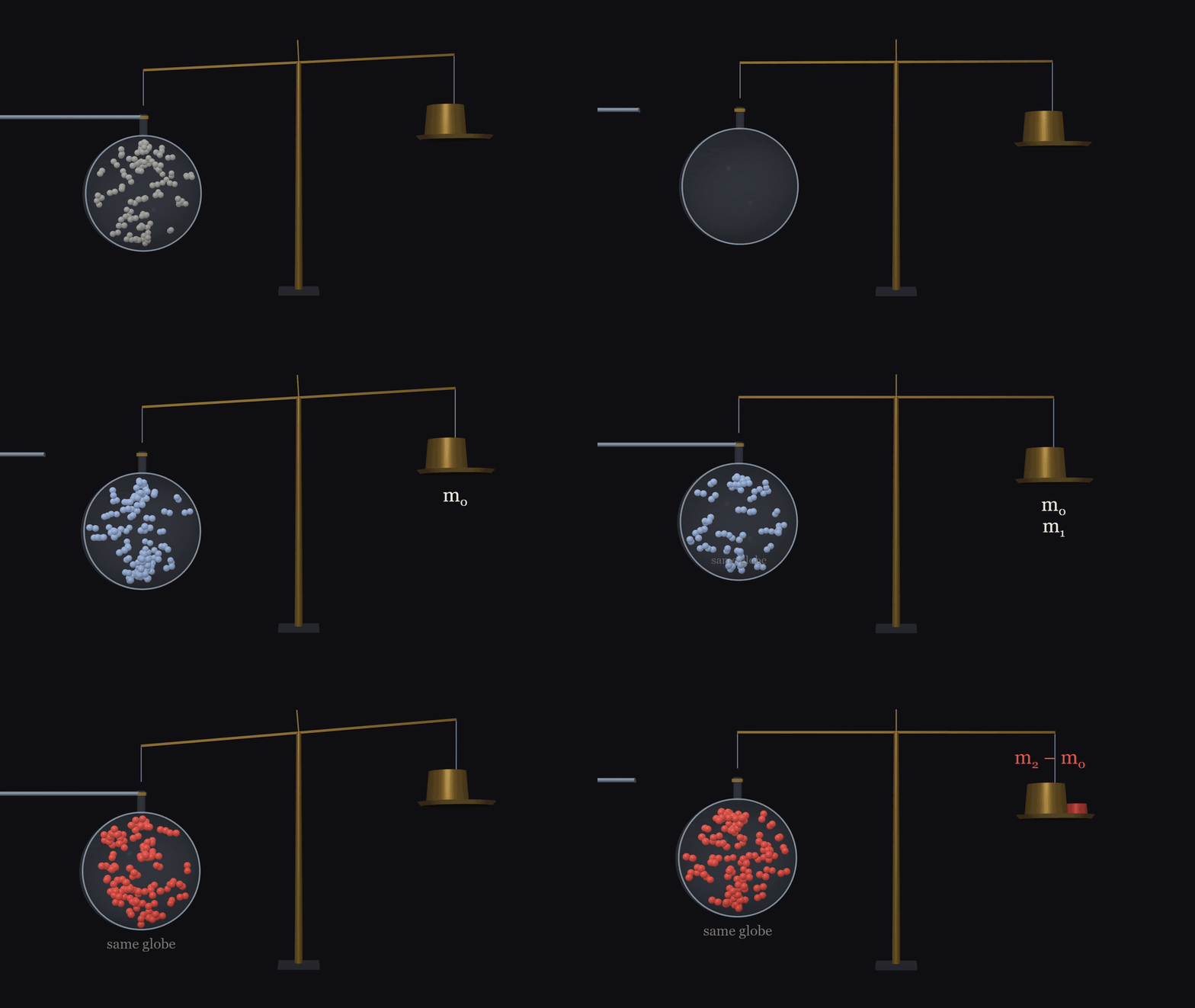
Figure 1. Weigh the glass globe empty, then full of the gas; the difference is the weight of the gas.
What he got for oxygen was 15.88 times hydrogen, even further from 16.
After hydrogen and oxygen, it was nitrogen’s turn. His son said that he had probably thought this would not be difficult.
Nitrogen is the most plentiful gas in the air, about four fifths of it; most of every breath we take is nitrogen. It has no color and no smell, and normally it hardly reacts with anything. A nitrogen molecule is two nitrogen atoms joined together.
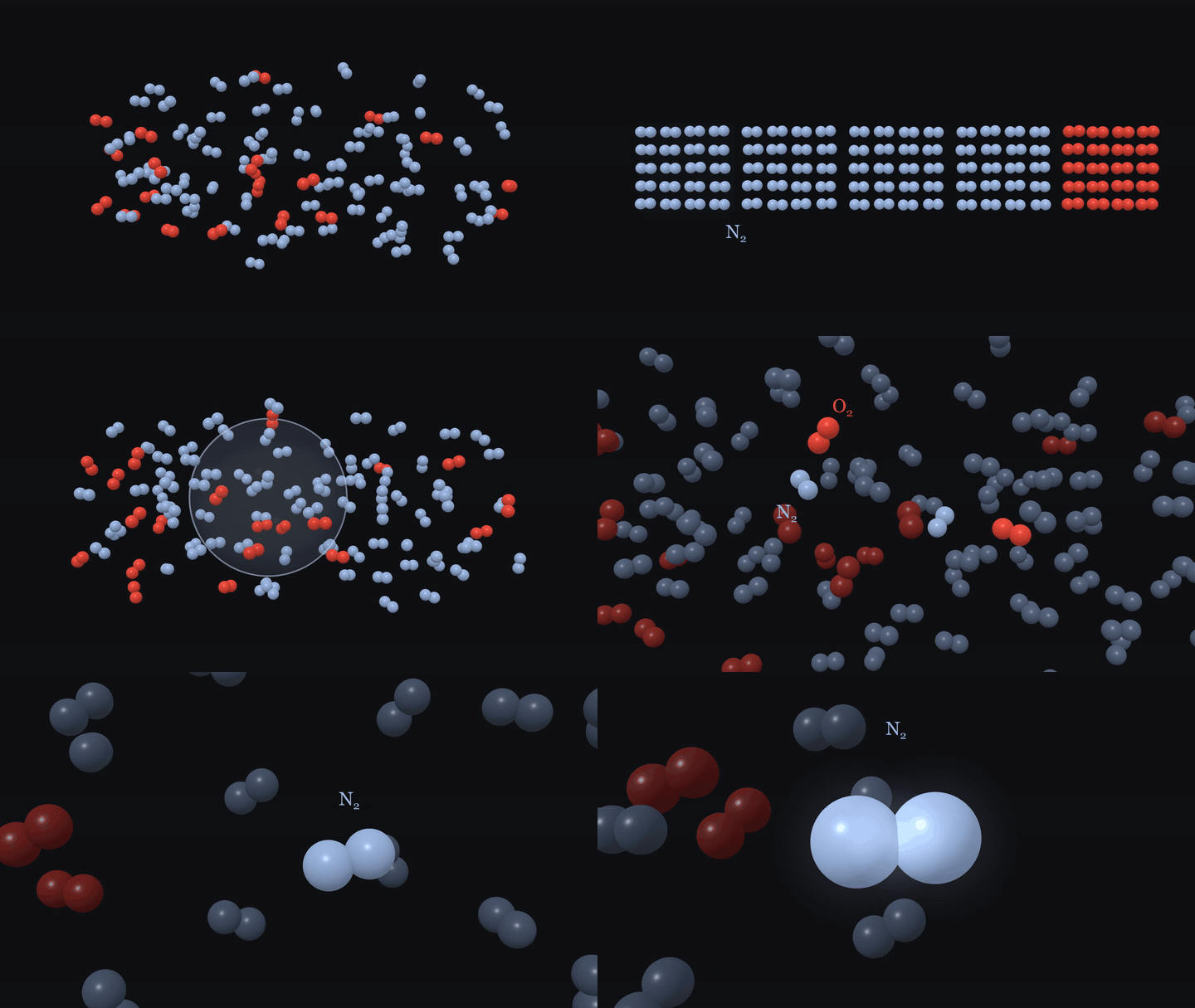
Figure 2. About four fifths of the air is nitrogen. A nitrogen molecule is two nitrogen atoms joined.
By his own later account, he first used a method a chemist had recommended to him: ammonia. Air takes up ammonia gas, then passes through a tube of red-hot copper. The oxygen of the air and the hydrogen of the ammonia burn to water, the excess ammonia is removed with sulfuric acid, and nitrogen is left. Here the copper does not take up the oxygen; it serves only as an indicator: as long as the copper stays bright, the oxygen has all been used up by the ammonia.
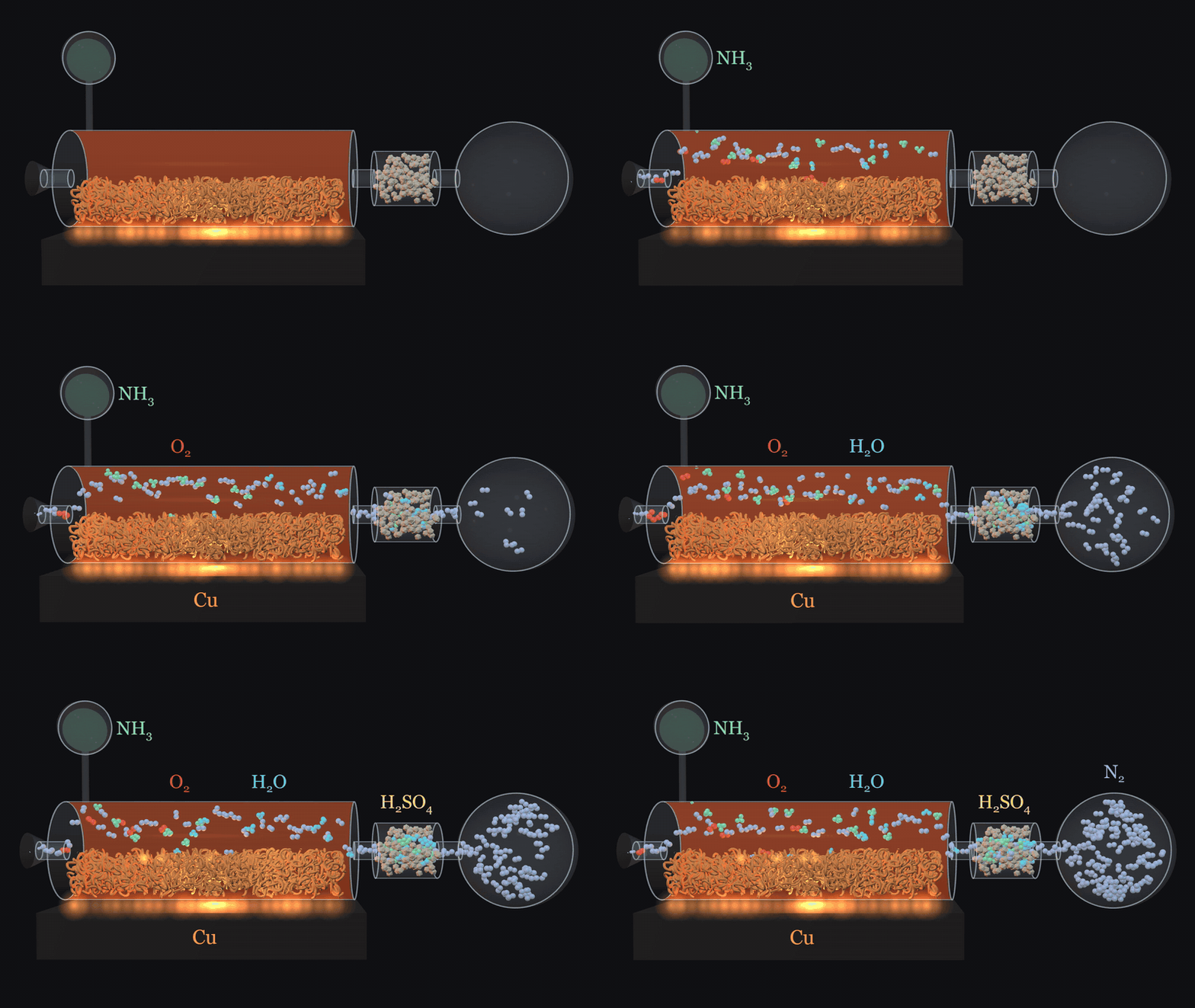
Figure 3. The ammonia method: air is passed over ammonia, then through a red-hot copper tube.
Several results agreed with each other, and he thought the work on nitrogen was finished.
But then he reflected that it was better to try another method, and that the best figures of the day had not been made this way. So he fell back on the usual procedure: take nitrogen from air by removing the oxygen, the water vapor and the carbon dioxide, and call what is left nitrogen. Red-hot copper consumes the oxygen. He expected the result to agree at once.
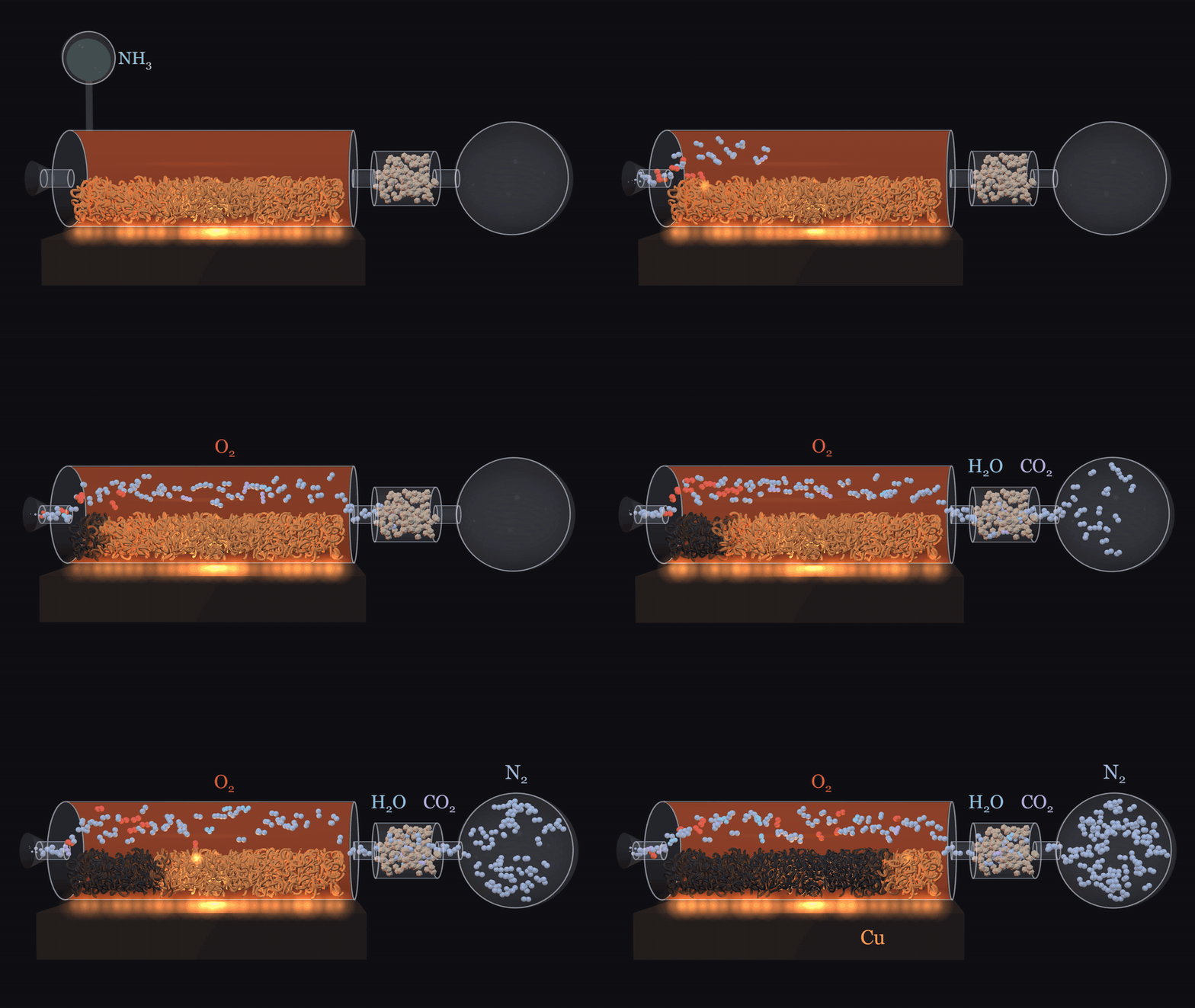
Figure 4. The usual way: nitrogen taken from the air, the oxygen taken up by red-hot copper.
Instead, nitrogen from ammonia came out lighter than nitrogen from air, by one part in a thousand.
In his Nobel lecture he speaks of his surprise and disgust, and says he was rather at a loss how to proceed.
Then comes this sentence from the lecture: It is a good rule in experimental work to seek to magnify a discrepancy when it first presents itself, rather than to follow the natural instinct of trying to get quit of it.
How exactly did he magnify it? The ammonia method burned ammonia with air, so most of the nitrogen that came out actually came from the air, and only a small part from the ammonia. He replaced the air with pure oxygen, and now all of the nitrogen came from ammonia.
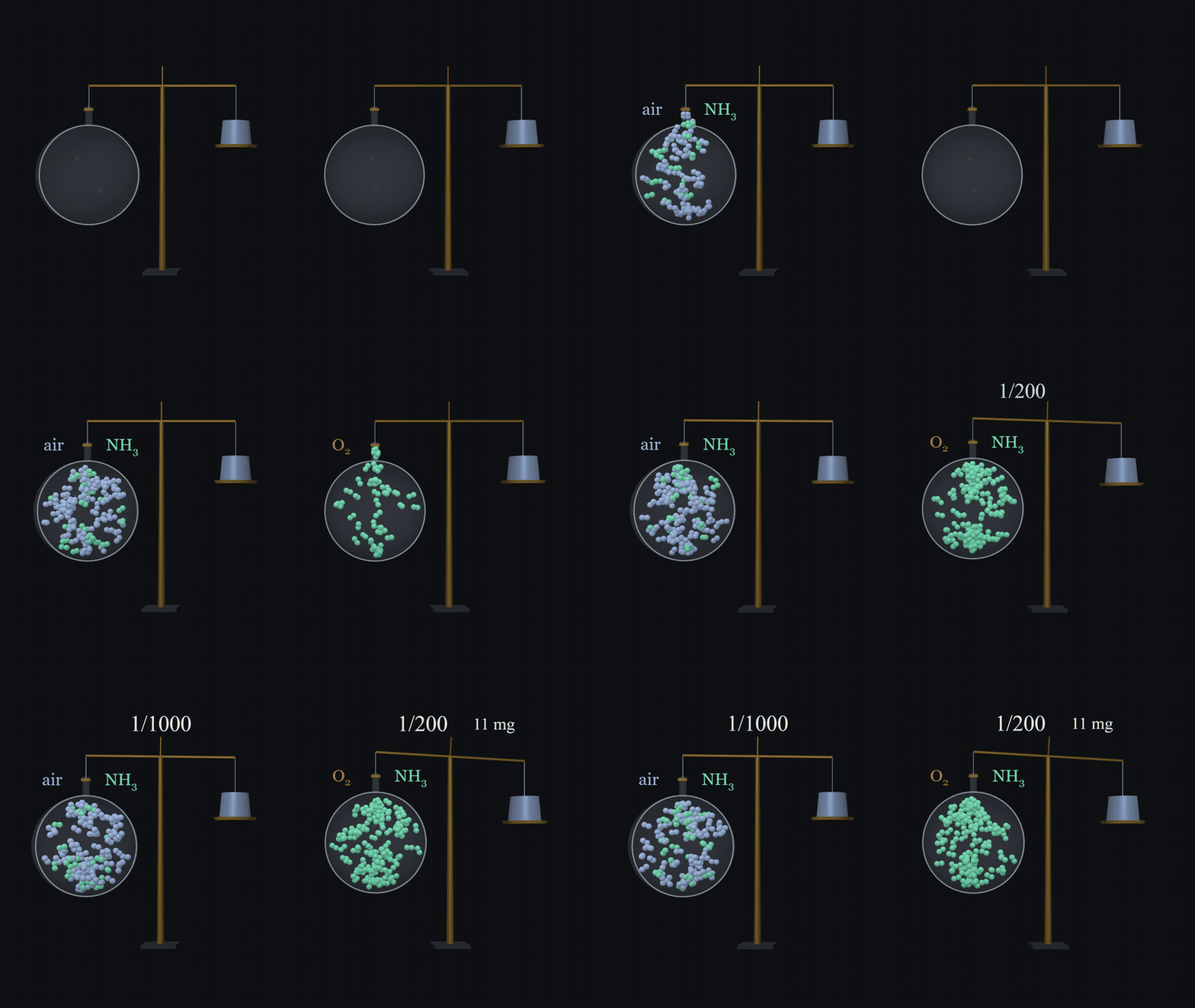
Figure 5. With pure oxygen instead of air, all the nitrogen comes from the ammonia. The difference grows from one part in a thousand to five: the first figure had been diluted by nitrogen from the air.
With that one change, the difference jumped to five parts in a thousand, about 11 milligrams. The one part in a thousand had been diluted by the nitrogen from the air.
He also wondered whether the nitrogen itself might be in a different state: in the chemically made gas, some molecules might have split apart, making it light. If so, then given time the pieces should join up again, and the nitrogen should get heavier.
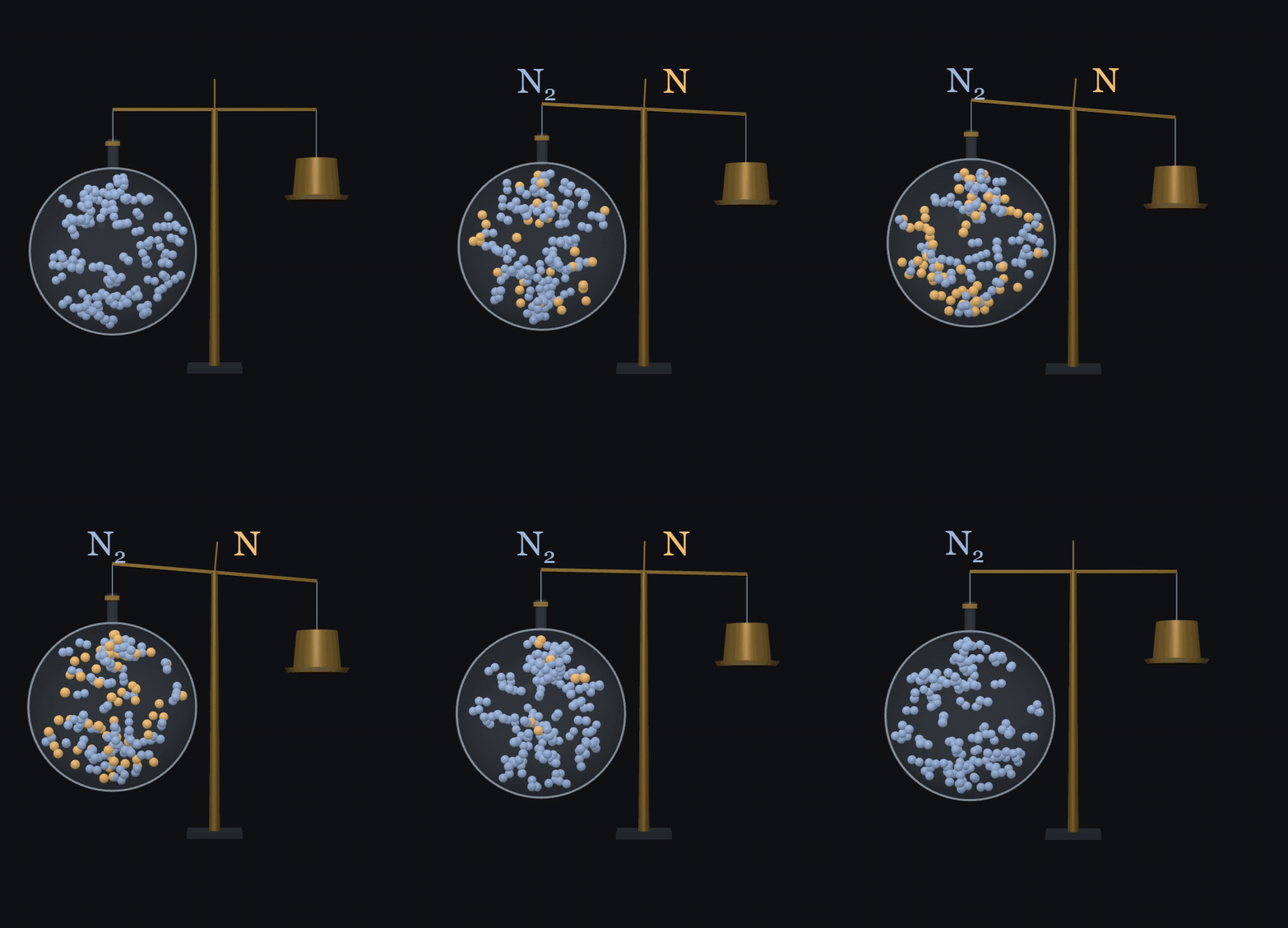
Figure 6. Perhaps some molecules of the chemical nitrogen had split apart, making it lighter?
He kept this nitrogen for eight months to see if it got heavier. When he weighed it again, it had not changed.
The later paper has a table listing the weight of the same globe’s filling. Nitrogen made by chemistry, from three sources, comes to about 2.30 grams; nitrogen taken from air, by three methods, to about 2.31 grams.
The two groups differ by about 0.011 grams, about five parts in a thousand.
Whatever compound it came from, the nitrogen was light; however it was taken from air, the nitrogen was heavy. There are not many gases lighter than nitrogen, and the likeliest to get in was hydrogen. So he deliberately put hydrogen into the nitrogen from air, enough to make it four percent lighter, and it weighed no lighter at all: the hydrogen had burned away in the furnace. The light gas had passed through the same furnace, so hydrogen was not why it was light.
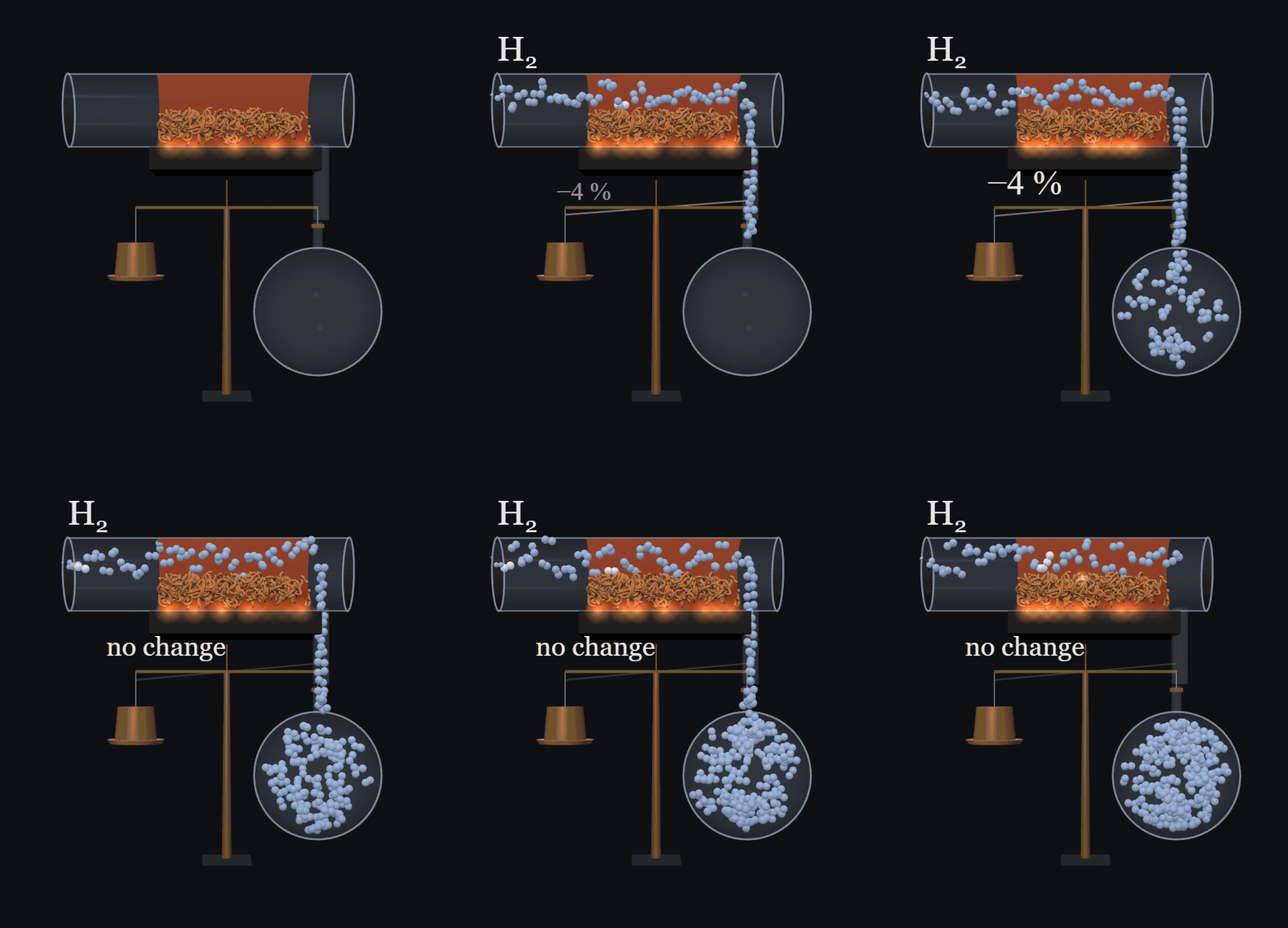
Figure 7. Hydrogen was added on purpose to the nitrogen from the air, enough to make it four percent lighter; it came out no lighter at all, because the furnace burned the hydrogen away.
Then might the heavy gas still hold some oxygen? Oxygen is only one-seventh heavier than nitrogen, so even to add one part in a thousand, nearly one percent of oxygen would be required. He wrote: I could detect none whatever.
So the trouble was in the air.
One part in a thousand, or five
Both numbers are right; they are two stages. The 1892 letter speaks of one part in a thousand; in 1894 he made all of the nitrogen come from ammonia, and the difference became five parts in a thousand. When the prize was awarded in 1904, the President of the Academy spoke of half a percent, and also said that the error of the weighing was only one fiftieth of that.
When his son wrote the biography, he said that the accounts of 1892 and of 1895 are hard to reconcile, and that the original laboratory notebooks have been destroyed. The same goes for which came first, the ammonia method or the copper method: Rayleigh himself said twice that ammonia came first; his son’s book describes copper first, and also says that he himself cannot settle it.
These two men
Rayleigh
Lord Rayleigh was born John William Strutt, in Essex, in 1842. In 1865 he came first in the mathematics honors examination at Cambridge.
In 1871 he wrote two papers on the light of the sky and its color. Today, when we say why the sky is blue, we still use his name: Rayleigh scattering.
Sunlight has every color in it. When it meets a particle much smaller than a light wave, it is thrown off in all directions, and the shorter the wavelength, the more it is thrown. The wavelength of blue light is about two thirds that of red, and blue is scattered four or five times as strongly. So when you look up by day, the light reaching you from all sides leans blue, and the sky is blue. When the sun goes down, its light crosses far more air on a slant, the blue is scattered away along the path, and what is left leans red.

Figure 8. Sunlight meeting particles much smaller than its wavelength is scattered in all directions, the shorter waves more strongly: blue four to five times as much as red.

Figure 9. By day the light scattered in from every side is bluish, so the sky is blue; at sunset the light crosses far more air, the blue is scattered away, and what is left is red.
In 1871 he said only that these were very small particles, and not what they were. Two years later, Maxwell wrote to him asking about the molecules of air. Not until 1899 did he work it out: even with no other particles in the air, the molecules of air alone would still give a blue sky.
The next year he fell badly ill and went to Egypt to recover. At the pyramids, Arabs pulled and pushed them up. After lunch he gave these men the slip and climbed again, to see what it was like with no one pulling. Halfway up he was caught, and only after paying a franc was he allowed to climb by himself.
On the boat on the Nile, he began The Theory of Sound in the cabin. Before he could get anywhere, the entrance had to be closed and every fly in the cabin killed. In the mornings it was hard to persuade him to go ashore, however beautiful the temple.
In 1873 his father died, and he inherited the title and moved into the family’s country house.
In 1879, Maxwell died, and Rayleigh succeeded him as Cavendish Professor at Cambridge. Five years later he resigned, went back to the country house, and did his experiments in his own laboratory.
He also ran a color experiment: mix red light and green light to match a pure yellow. His wife’s brother Gerald looked at it and said it was far too red, almost as red as red sealing wax.
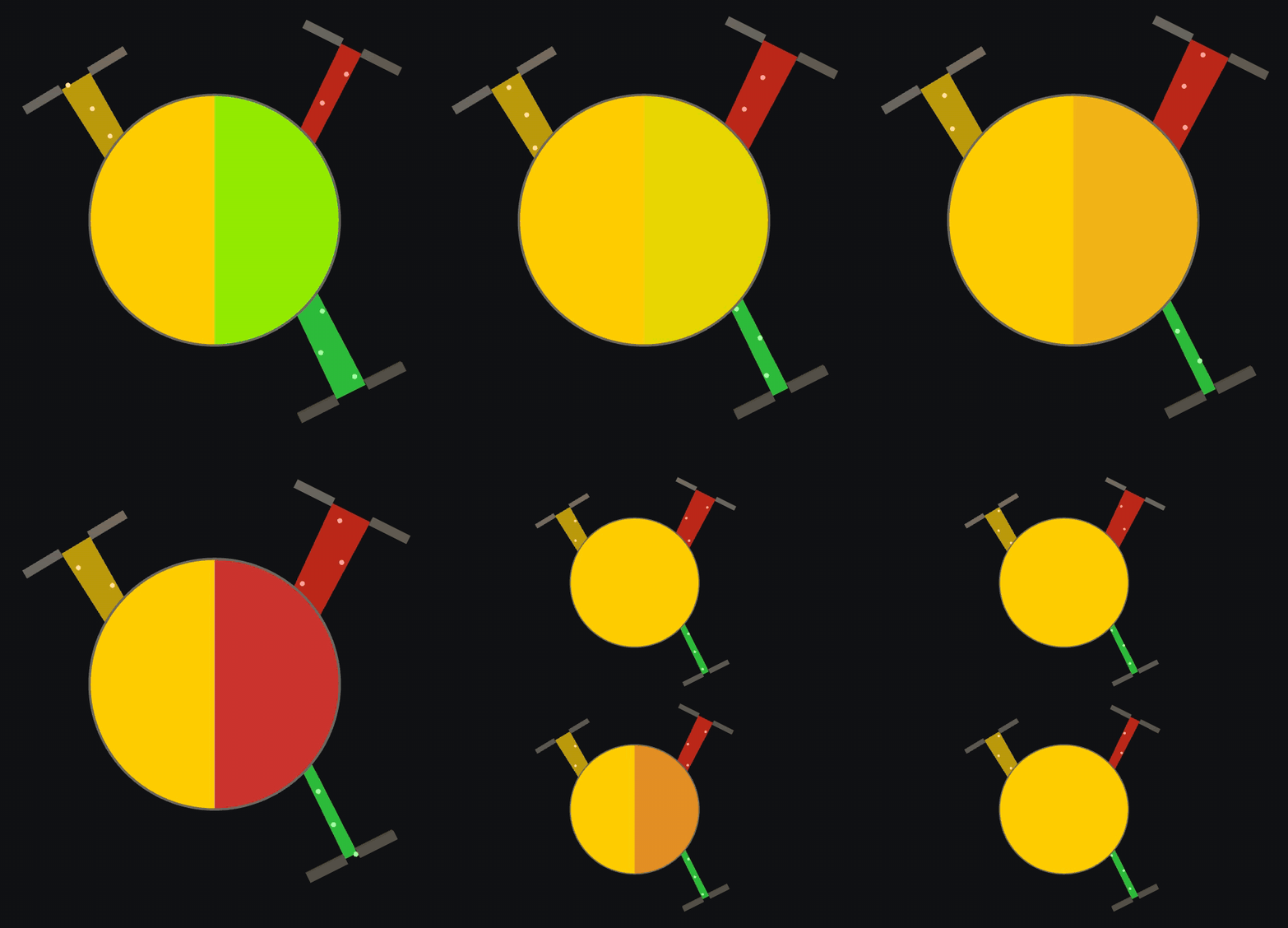
Figure 10. Rayleigh’s color match: red and green light mixed to match a pure yellow.
They could tell red from green perfectly well; to match the same yellow, they simply needed less red than other people.
Some years before, they had argued over the color of a liquid, each thinking the other had it wrong. This time he followed it up, and found a difference in color vision that no one had noticed before.
He also tested the students in his laboratory: of 23 men, 7 differed from him. Among the names is a J. J. Thomson; inferred from the time and place, he is the one who later won the physics prize in 1906.
Color vision is still tested with his mixture today, and it is called the Rayleigh match.
He also looked into another matter: communication with spirits. In 1874 he invited a well-known medium to his country house and sat through several séances. He sealed a pencil and paper into a glass bottle, melted the neck shut, put it in a wooden box, and placed it under the table, waiting for the spirit to write. Scribbling appeared on the wooden box outside; inside the bottle there was nothing.
45 years later, in 1919, he spoke of this at the Society for Psychical Research, saying that he had recently looked at the bottle again, and that this opportunity had been waiting unused for 45 years. He said that these things were not enough to prove that spirits were really at work, but that he had also always found it hard to accept the other explanation. This was his last public appearance.
Rayleigh:
- November 12, 1842, born in Essex
- 1861, entered Trinity College, Cambridge
- 1865, first in the mathematics honors examination
- 1871, married; the same year, wrote the papers on the color of the sky
- 1873, his father died; inherited the barony and moved into Terling Place; elected a Fellow of the Royal Society
- 1877–1878, the two volumes of The Theory of Sound published
- 1879–1884, Cavendish Professor at Cambridge
- 1887–1905, Professor of Natural Philosophy at the Royal Institution
- 1892, the letter asking for help in Nature
- 1894, announced a new gas in the air
- 1904, Nobel Prize in Physics
- 1905–1908, President of the Royal Society
- From 1908, Chancellor of the University of Cambridge
- June 30, 1919, died at his country house
Ramsay
The other man is the chemist who recommended the ammonia: William Ramsay. He was nearly ten years younger than Rayleigh, and was born in Glasgow. As a boy he had a small brass cannon, packed hard with gunpowder, that would not go off. In a temper, he threw it into the kitchen fire. The neighbor opposite had a new hole in the dining-room wall.
Later he broke a leg at football and, laid up, took to reading chemistry, chiefly to find out how to make fireworks. His biographer said it was hard to imagine how he handled these chemicals lying down, but fortunately no accidents are recorded.
Later he took his doctorate at Tübingen in Germany, and wrote home: I had two explosions today. From 1887 he was professor of chemistry at University College London. He could whistle, could accompany himself on the piano, and would burst into song at the slightest excuse.
Two months after the letter asking for help appeared, Ramsay wrote to Rayleigh. He had thought of several possible impurities, none would do, and he wrote: So I give it up.
But had he really given it up?
After signing the letter, he carried on writing: You will doubtless think me a bore for all this; but I have been sleeping over the nitrogen and have revolved these points in my dreams. Then came six numbered questions. Only at the very end: Please don’t trouble to reply.
Ramsay:
- October 2, 1852, born in Glasgow
- 1870–1872, doctorate at Tübingen
- 1887–1913, professor of chemistry at University College London
- 1894, separated argon with Rayleigh
- 1895, found helium on Earth
- 1898, with Travers, found krypton, neon and xenon
- 1904, Nobel Prize in Chemistry
- July 23, 1916, died
Racing to separate it
On April 19, 1894, Rayleigh reported the anomaly to the Royal Society. If the nitrogen of air really had something else mixed in it, the way to find out was simple: remove all the nitrogen and see what is left.
The very next day the British chemist William Crookes wrote to Rayleigh. He worked on spectra, and one kind of vacuum discharge tube is named after him, the Crookes tube. He suggested using electric sparks to combine the nitrogen with oxygen, and absorbing the result. You might even have the other gas left behind, he wrote.
Ramsay had heard too. He set an assistant to eat up the nitrogen of air with red-hot magnesium. On April 23 he wrote to his wife: We may discover a new element.
Had he asked Rayleigh first? Ramsay later wrote in a book that he had asked and received permission. Rayleigh’s son wrote that Ramsay very naturally took silence for consent. But Rayleigh said later: Well, no, I did not exactly do that.
In his letter of May 24, Ramsay also asked Rayleigh: Has it occurred to you that there is room for gaseous elements at the end of the first column of the periodic table?
Rayleigh was in no hurry to answer at the time, and in no hurry to start. His son wrote that it was not in his character to do things in a hurry. Only at the beginning of July did he start the sparks. The coil’s interrupter often stuck, and it had to be watched all night. He had a telephone arranged to carry the hum of the coil from the laboratory upstairs to the room below. He dozed in his armchair, woke when the sound stopped, and went up to start it again.
On August 4, Ramsay wrote to Rayleigh: I have isolated the gas. I didn’t want to trespass on your preserves and yet I feel that I have done so.
Two days later Rayleigh replied: I believe that I too have isolated the gas, though in miserably small quantities. I feel, he wrote, that the only solution is a joint publication.
The next day Ramsay wrote back, saying that they should call it Q for now.
In fact someone had seen it more than a century before. In 1785 Henry Cavendish sparked the nitrogen of air again and again, and was left with a small bubble which, he wrote, certainly was not more than one hundred and twentieth of the bulk. Ramsay says that on reading this, he wrote beside it: look into this. Rayleigh and Ramsay later wrote that what was left may well have been this gas.
Still, to say that Cavendish discovered argon goes too far. He did not say what the small bubble was. Rayleigh’s son wrote that some people say Cavendish discovered argon, and that he entirely disagreed.
The announcement, and nobody believing it
A week later, on August 13, at the British Association’s annual meeting in Oxford, Rayleigh announced in public that the air holds a new gas.
But would anyone believe it?
At the time the London humor magazine Punch printed a letter from a self-styled shareholder in one of the leading gas companies, stating authoritatively that no new gas is required by the public.
This was a joke, taking the new gas in the air for the gas people burn. It was not the only joke. A French satirist is said to have called it “Oxford gas”. Lord Halsbury, teasing, told Lady Rayleigh he had heard the gas was called “Mrs. Harris”, the friend in a Dickens novel who is always being mentioned but does not actually exist.
Among chemists, in fact, many did not believe it was a new element. James Dewar wrote to The Times that it might be only nitrogen, squeezed together in a chemical reaction, as oxygen becomes ozone.
As soon as the Oxford meeting was over, Rayleigh went back to work. What he had of the gas came to only about a quarter of a thimbleful. Using the gas engine that drove the cream separator on the estate’s dairy, he separated it on a large scale in the old brewhouse. His assistant poured caustic soda solution into the dairy’s tinned vessels. The only part of the whole outfit that was newly bought was a belt, and it arrived a day or two late. His son said that in matters of this kind he had never seen him come so near to impatience.
It has cost about one thousand times its weight in gold, he wrote. It did not have a name yet. One expert proposed calling it aeron. Whenever he tried saying it, people would often ask: When may we expect Moses? (Aeron sounds like Aaron, the brother of Moses in the Bible.)
Ramsay came to the country house for a weekend, and the two discussed how to divide the work, with Ramsay to study its chemical properties. Rayleigh said that he did not believe it had any chemical properties.
Some said it had been manufactured in the experiment. To show that it had not, they made the air diffuse through a series of long tobacco-pipe stems. In that room the water on the floor was ankle-deep, and one could only work standing on a plank.
The doubters kept talking. Kelvin said that German chemists were laughing at it in private. The chemical industrialist Ludwig Mond told Rayleigh that some chemists thought his assistant Gordon had fudged the weighings.
In December Dewar wrote pressing for details, and Rayleigh replied that discussing it this way was contrary to scientific usage. Dewar answered him: I do not want to rush in where Angels fear to tread. The next day The Times wrote: With these grave uncertainties brooding over their discovery, it is remarkable that Lord Rayleigh and Professor Ramsay should prefer to keep silence. His son says Rayleigh was extremely angry at the time.
Why the silence? One reason was that the Smithsonian Institution in America had set up a prize of 10,000 dollars, and publishing first would rule them out. That prize later went to the two of them.
In mid-December Ramsay came to the country house for a weekend again, took from his inside breast pocket an upside-down test tube stoppered with a cork, and wanted to spark it then and there.
On January 31, 1895, the two men’s long paper was read at the Royal Society. Someone asked to see the gas, and Ramsay held up a sealed glass tube that was actually almost empty. Rayleigh said: I did not know you had as much as that. Ramsay answered: I did not say what pressure it was at. A gas is invisible anyway, and at low enough pressure there is almost nothing in the tube.
They gave it a name, argon, from the Greek for inactive. The paper says it is a most astonishingly indifferent body.
Mendeleev did not believe it either. He said that if a molecule of this gas has three atoms, it could be thought of as condensed nitrogen, three nitrogen atoms joined together. The author of the periodic table himself said there was no room for it in the table.
So what was argon? And who was right?
Why
Where the five parts in a thousand came from
First, the five parts in a thousand. When Rayleigh took nitrogen from air, he removed the oxygen, water vapor and carbon dioxide, and took all the rest for nitrogen. In fact about one percent of it was argon.
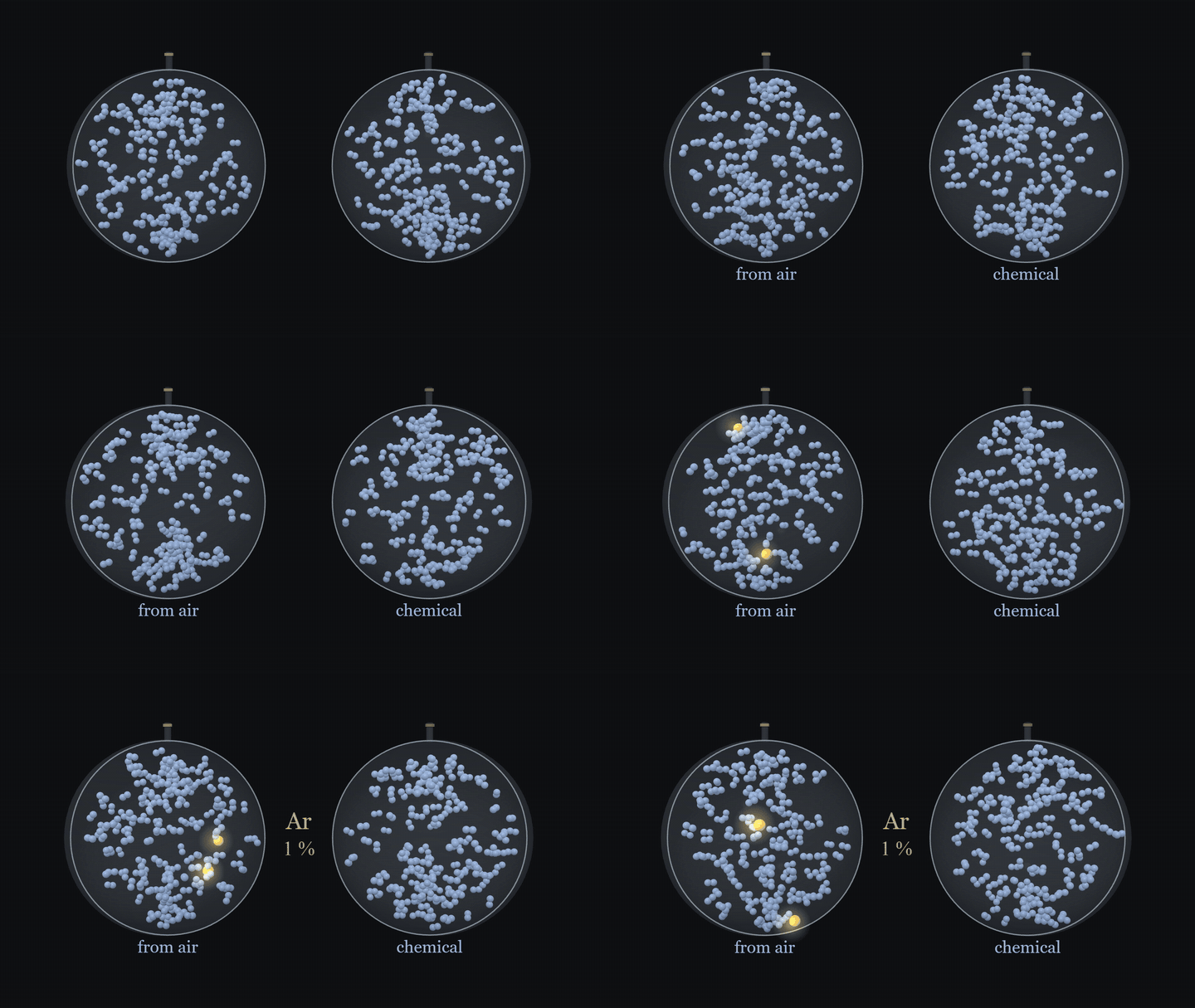
Figure 11. Nitrogen from the air, with oxygen, water vapor and carbon dioxide removed, still held about one percent of argon.
Argon is heavier than nitrogen. Counting a hydrogen atom as 1, a nitrogen molecule weighs 28, and an argon atom 40. Mix in that little bit, and the whole gas is heavier by five parts in a thousand.
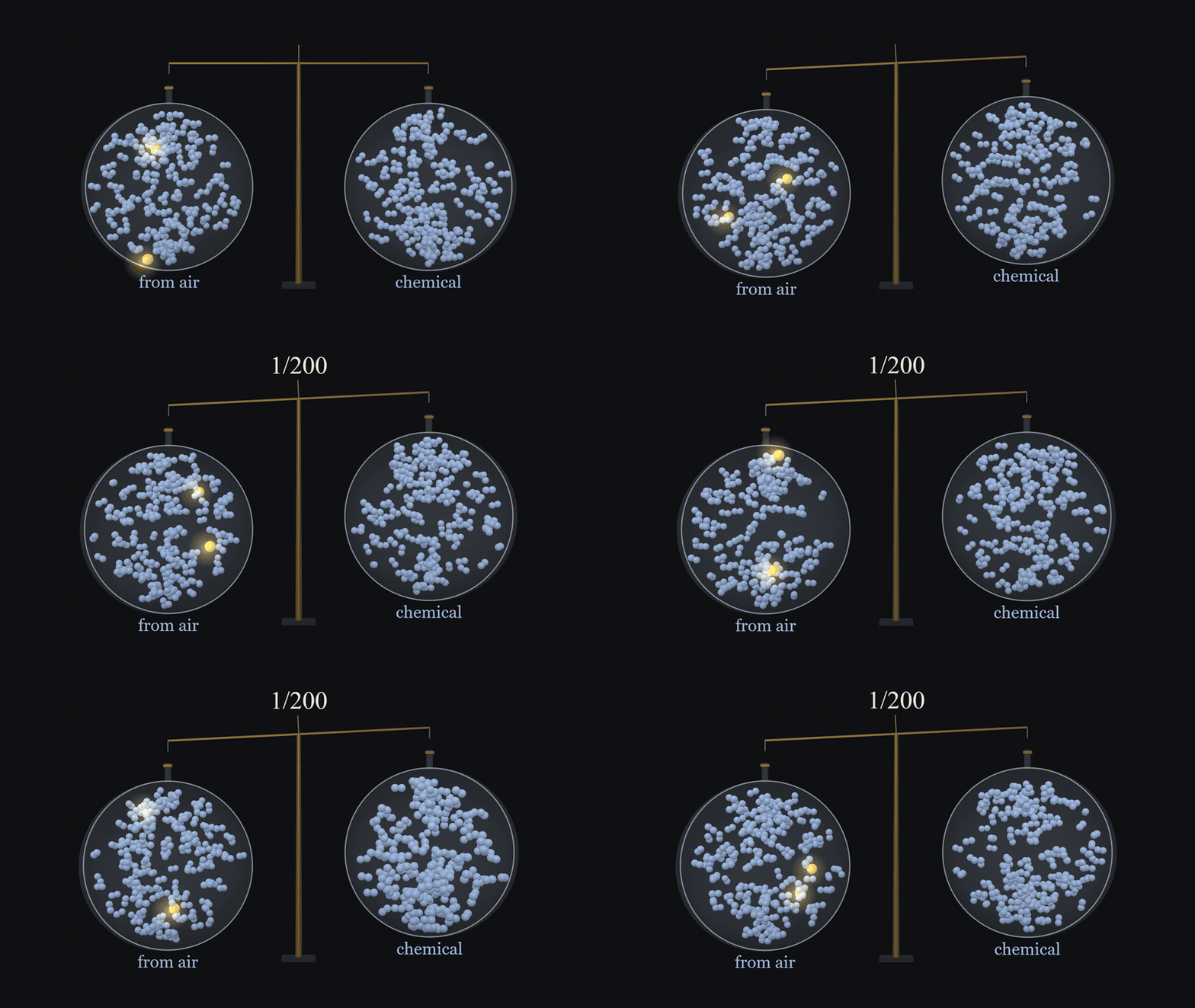
Figure 12. An argon atom weighs 40, a nitrogen molecule 28. That small admixture makes the whole gas five parts in a thousand heavier.
Nitrogen made by chemistry is pure, and so it is lighter.
One atom, or two
Next, what kind of gas is it? A molecule of two atoms joined together flies about and also spins; a single atom can only fly about. When a gas is heated, such a molecule puts part of the energy into spinning, so the two kinds of gas differ in how easily they warm.
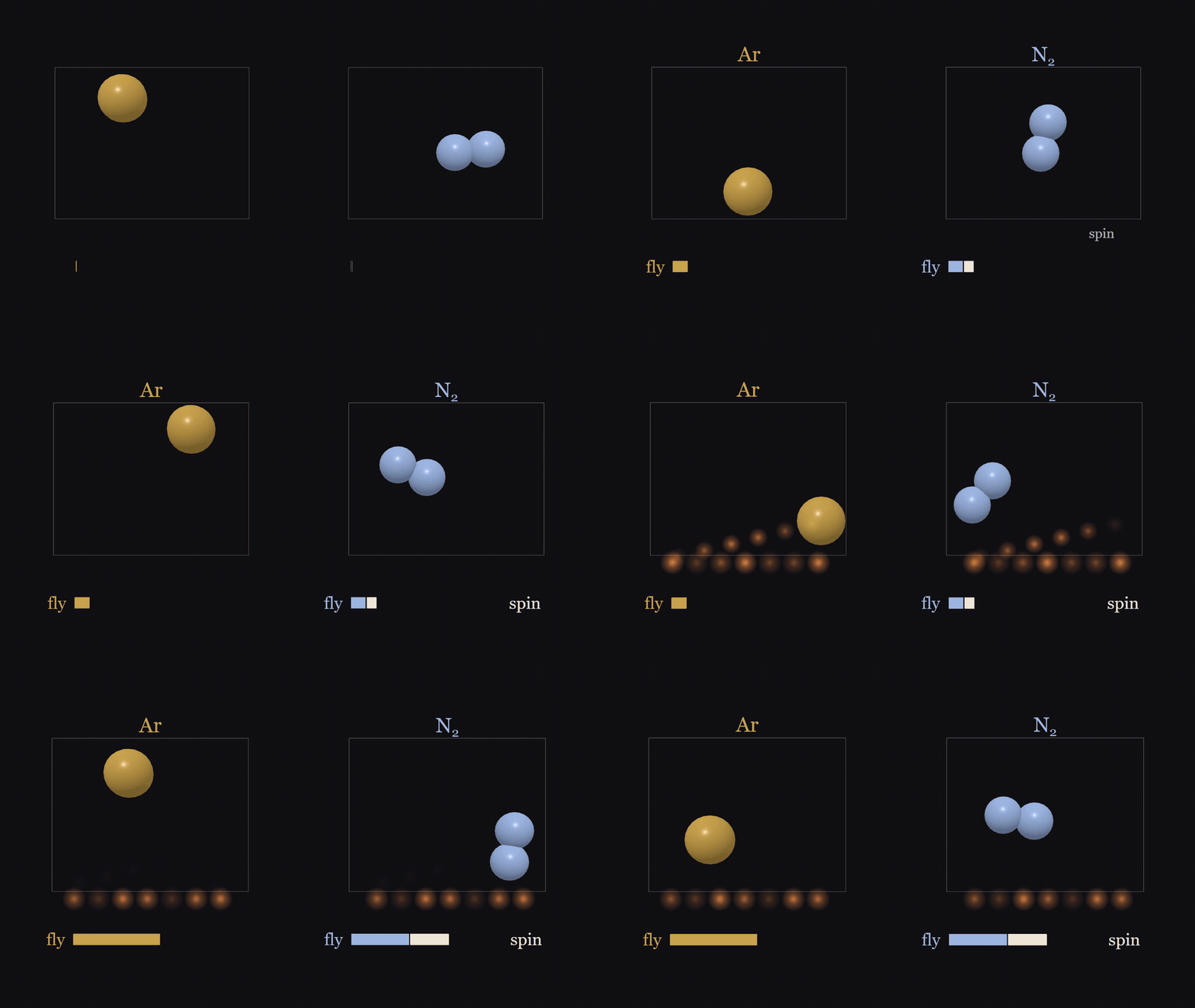
Figure 13. A molecule of two atoms moves about and also spins; a single atom only moves about.
Sound is a gas being squeezed and released. Squeezed, a gas heats up, and when hot it pushes back harder. If the energy goes partly into spin, a squeeze warms it less, and it pushes back more softly. How fast sound travels depends on how hard the gas pushes back, and on how heavy the gas is. For a note of the same pitch, slower means a shorter wavelength.
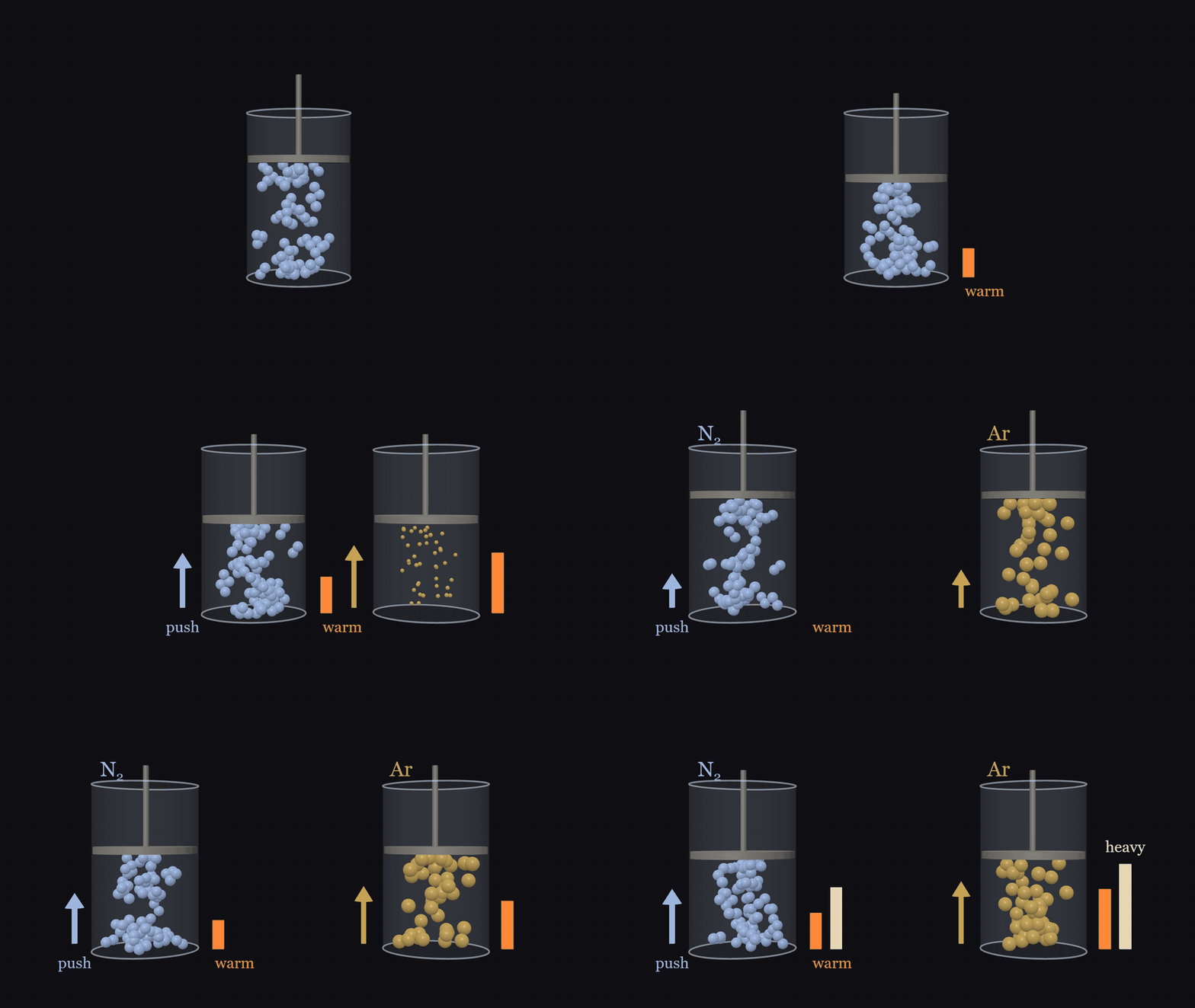
Figure 14. Sound is the gas squeezed and released. Squeezed, it heats and pushes back harder; a gas that puts energy into spinning pushes back more softly.
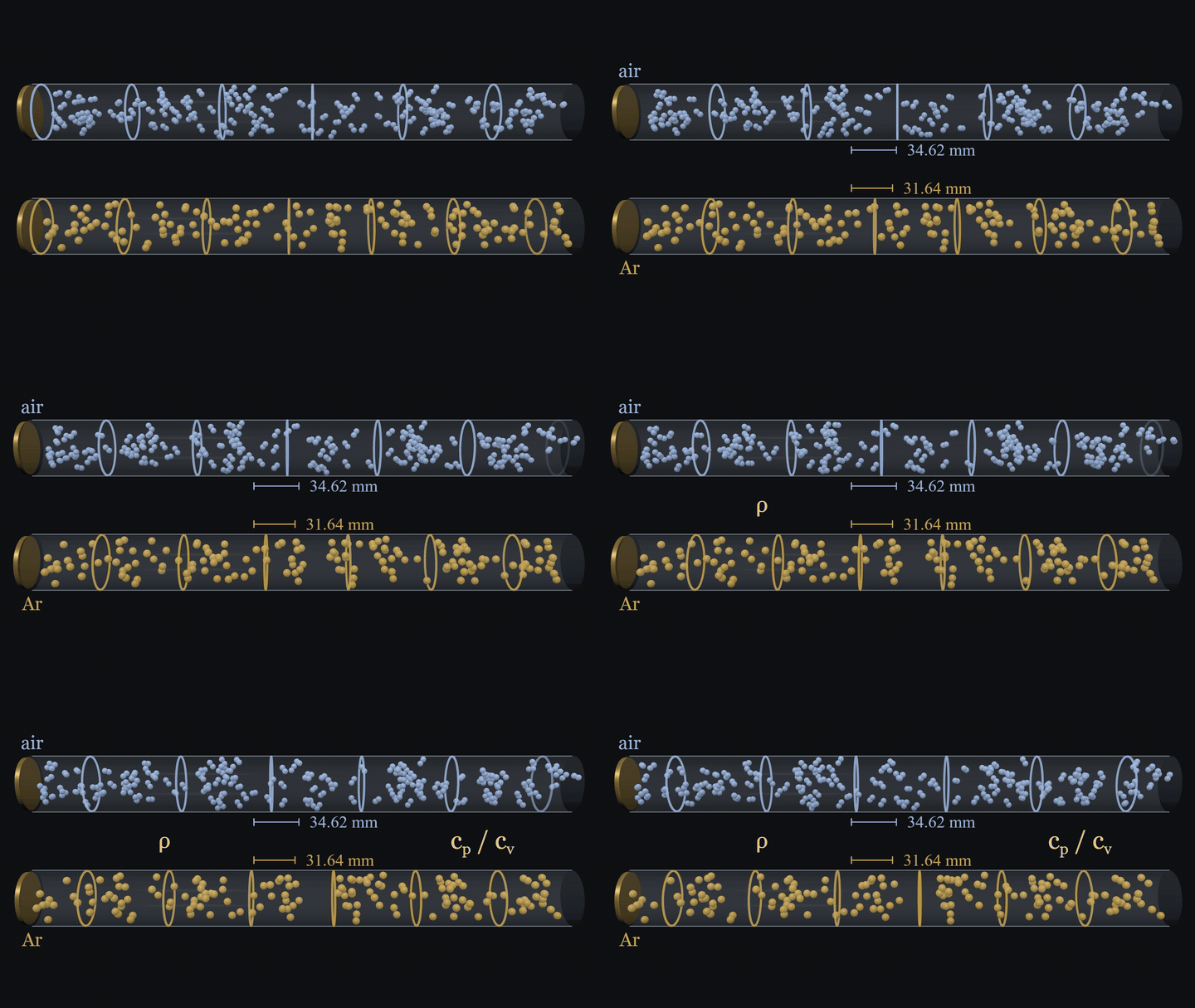
Figure 15. For the same note, the slower the sound travels, the shorter the wavelength.
Ramsay compared the wavelengths of the same note in air and in argon, took in the densities of the two gases, and worked out a ratio called the ratio of specific heats. Several measurements came out between 1.61 and 1.66, and the paper’s conclusion was that it is practically 1.66.
The paper says that this is the theoretical ratio for a monatomic gas. That is, argon is not molecules of two joined atoms, but one single atom after another.
This is exactly why Mendeleev did not believe it. He wrote: If we admit that the molecule of argon contains but one atom, there is no room for it in the periodic system. Even if its atomic weight were in fact smaller, falling between chlorine and potassium, an extra eighth group would have to be opened in that period, which he did not accept. So he thought it more likely to be three nitrogen atoms joined together, or a molecule of six atoms.
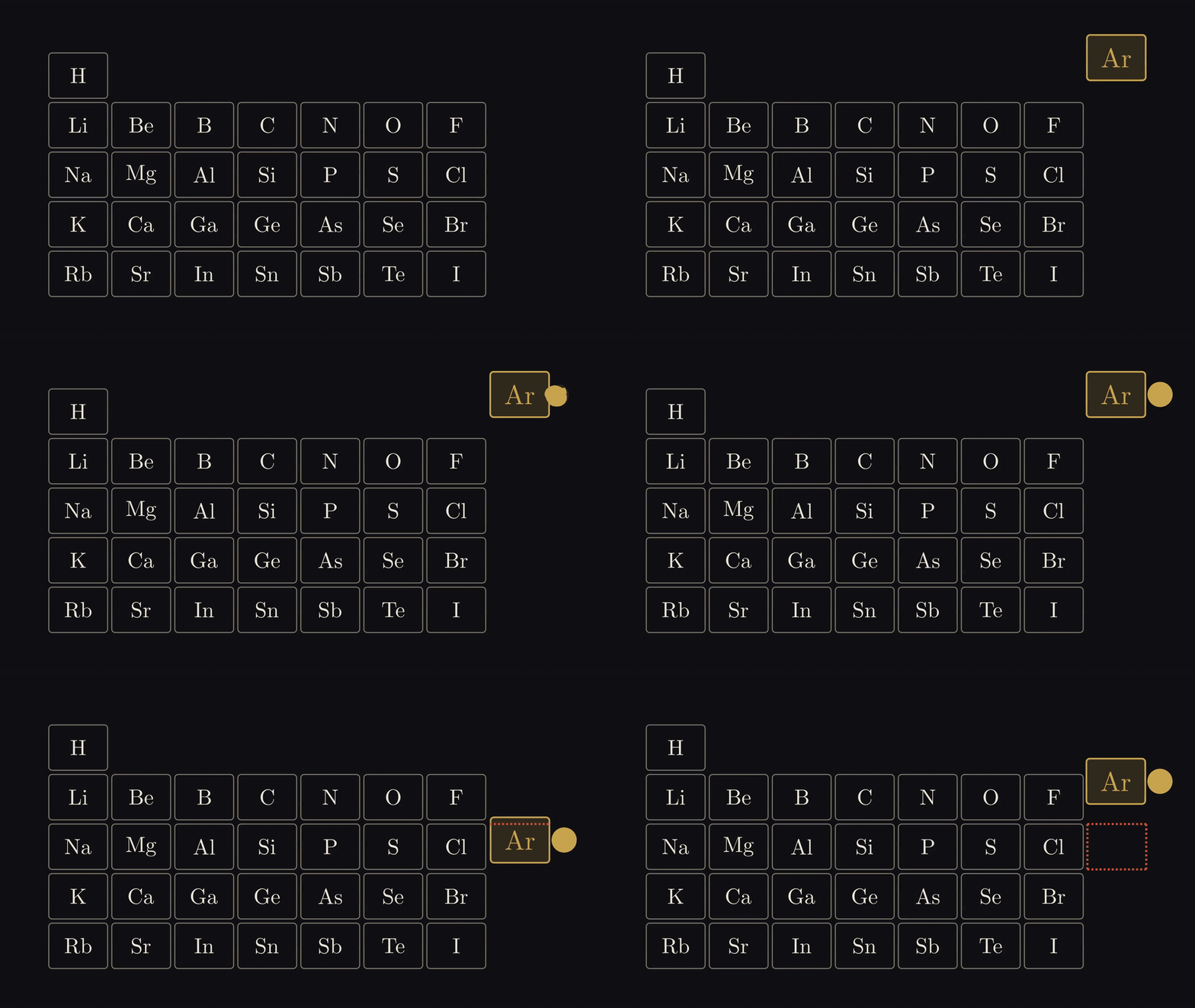
Figure 16. Mendeleev: if its molecule has only one atom, there is no place for it in the periodic table.
Helium, and the extra column
This page of Nature is an interesting one. On the same page where Mendeleev says argon may be condensed nitrogen, Ramsay reports that he has released a gas from a uranium mineral, with a yellow line in its spectrum. He had no fine spectroscope, so he sent a tube of the gas to Crookes. Crookes recognized the line as that of helium, the element on the Sun.
Until then helium had been seen only in the Sun’s spectrum, and now it had been found on Earth.
In 1898, Ramsay and Morris Travers kept looking and found three more in one go: krypton, meaning hidden; neon, meaning new; xenon, meaning strange.
These gases shared one temperament: as far as anyone could then see, they reacted with nothing at all.
A few years later, Mendeleev himself placed them in the periodic table too, as a column of their own, the zero group. The man who had called argon condensed nitrogen was the same man. And the question of whether the table had a vacant place had already been asked by Ramsay, in a letter in May 1894.
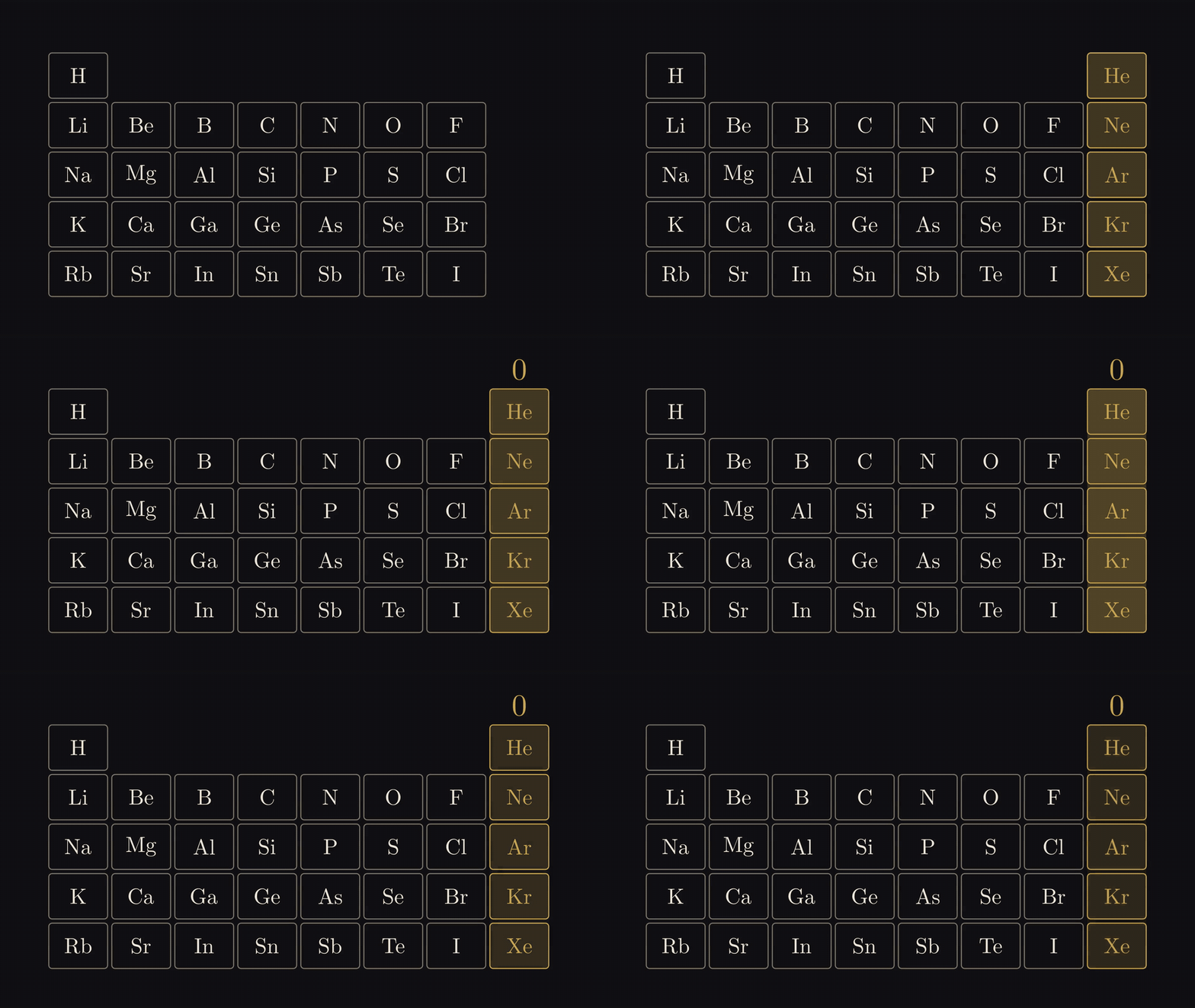
Figure 17. A few years later Mendeleev himself put these gases into the periodic table as a column of their own, group zero.
The periodic table was not broken by them; it gained a column.
Why they don’t react
Why they don’t react could only be explained later, once the structure of the atom was known. The outermost electrons of these atoms form a complete set: 2 for helium, 8 for the rest. An extra electron has no lower place to go; giving one up takes a great deal of energy.
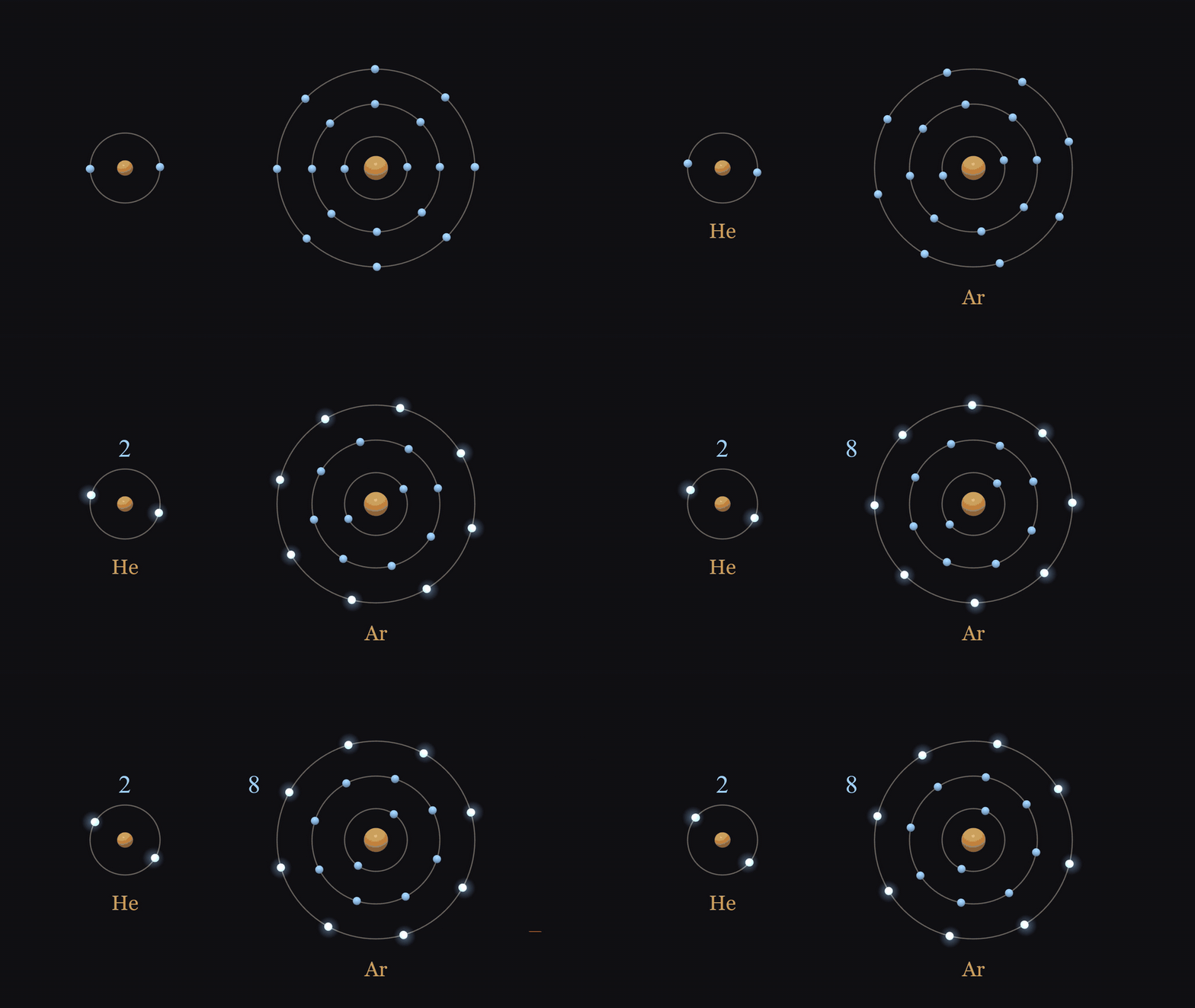
Figure 18. The outermost electrons of these atoms are exactly full: two for helium, eight for the rest.
That is why argon is lazy.
How much, and what use
This family all found uses later. Neon went into neon signs, and argon could go into light bulbs. Today, in electric welding, argon is also used to cover the weld and keep the air away from it.
Today we measure dry air as 0.934 percent argon, far more than carbon dioxide. In his Nobel lecture Rayleigh said: Argon must not be deemed rare; a large hall may easily contain a greater weight of it than a man can carry.
Is there really that much? Let’s work it out.
Working it out from the start
Below, we’ll start from two of Rayleigh’s numbers and work the whole thing through.
The numbers in the paper: under standard conditions, a liter of chemical nitrogen weighs 1.2511 grams, and a liter of atmospheric nitrogen weighs 1.2572 grams. The difference between the two:
That is the five parts in a thousand.
How much argon is in atmospheric nitrogen. Let the fraction, by volume, of argon in the atmospheric nitrogen be . One liter of this gas holds liters of argon, and liters of nitrogen.
What does a liter of argon weigh? Argon’s atomic weight is about 39.95, and a mole of gas under standard conditions fills about 22.41 liters, so a liter of argon weighs about
Add up the weights:
Solve it:
1.15 percent.
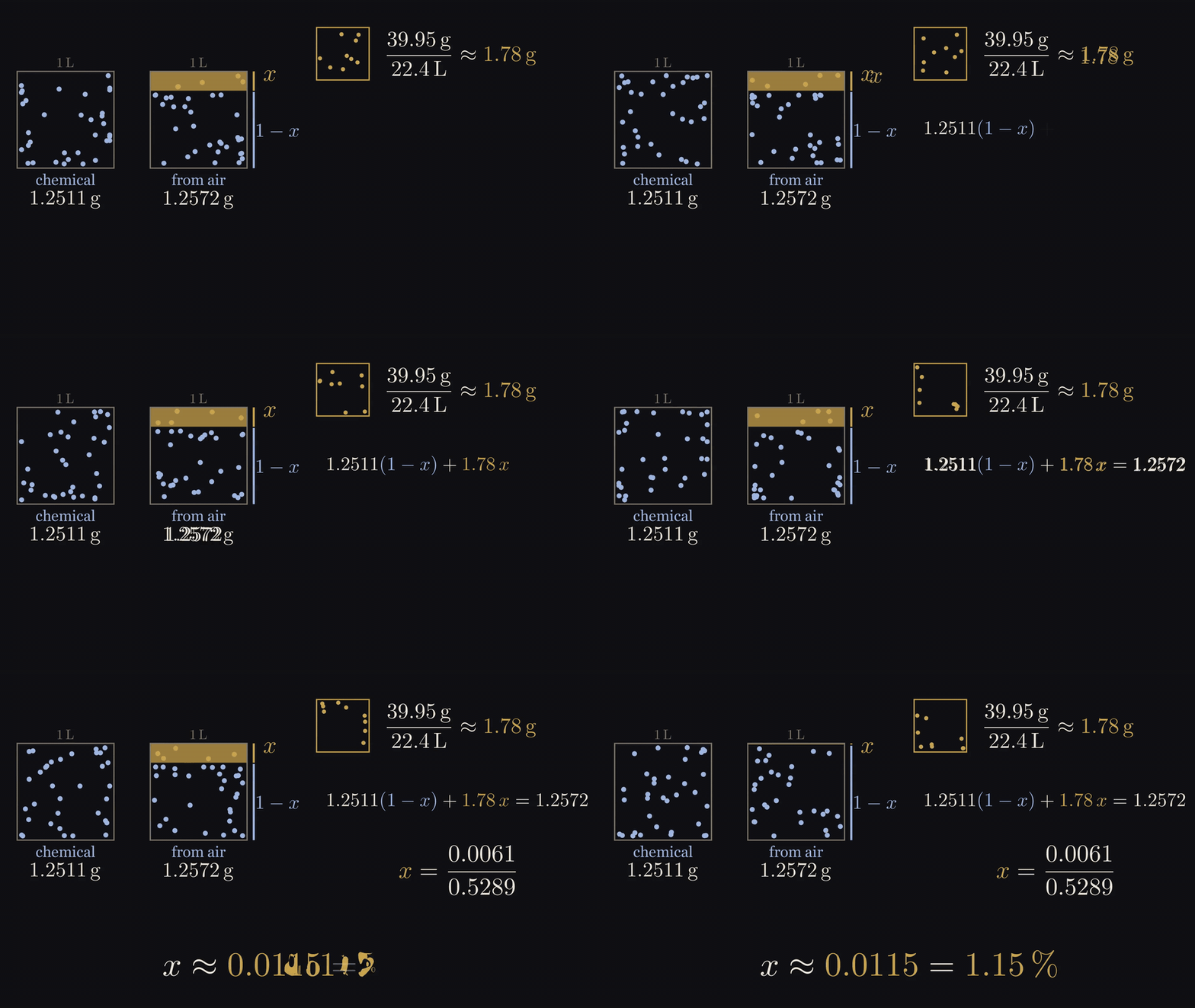
Figure 19. 1.2511 × (1 − x) + 1.78 × x = 1.2572; solving gives x of about 1.15 percent.
Today’s numbers: air is 78.08 percent nitrogen and 0.934 percent argon. Argon’s share of these two together is
The share worked out from Rayleigh’s small difference is almost exactly the share of argon we measure today.
It works the other way round too: argon is heavier than nitrogen by 12, so mixing in 1.18 percent makes the average heavier by
Exactly the five parts in a thousand.
The ratio of specific heats. A gas molecule’s energy is shared evenly among the ways it can move; each way is called a degree of freedom, and say there are of them. A single atom can only fly in three directions, . A molecule of two joined atoms can also spin about two axes, . (Spinning about the line joining the two atoms itself, and the vibration between the two atoms, get no share of the energy at room temperature; why they get none could only be explained once there was quantum mechanics.)
Each degree of freedom takes in of heat, per mole of gas, per degree of warming. At constant volume, the specific heat is then
At constant pressure, the gas also expands and does work, which adds one more :
Divide one specific heat by the other:
Nitrogen is , argon is .
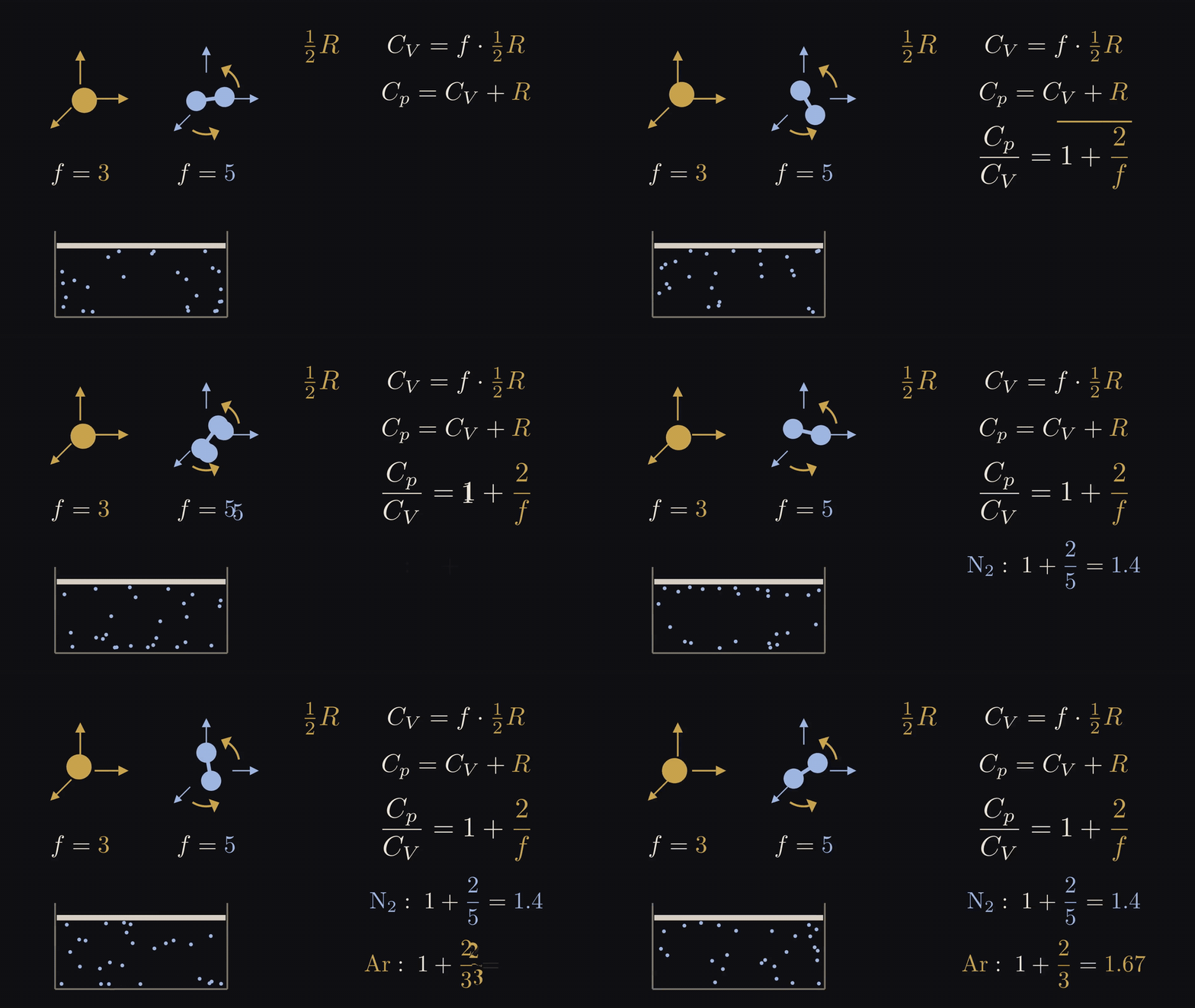
Figure 20. Dividing one specific heat by the other gives 1 + 2/f: nitrogen 1.4, argon 1.67.
Why comparing wavelengths is enough. The speed of sound squared equals this ratio times the pressure, divided by the density:
For the same note, the frequency is the same, and the speed of sound is . Comparing air and argon at the same pressure:
The right-hand side has only the density ratio and the wavelength ratio, and both can be measured, with no need to know beforehand how heavy the molecule is. That matters, because how heavy the molecule is was the very question. The of air is known to be about 1.4; argon’s came out at 1.66, close to the theoretical value of 1.67.
That hall. A hall 20 meters long, 10 meters wide and 5 meters high holds 1000 cubic meters of air. Of that, 0.934 percent is argon:
At room temperature the gas is a little thinner, about 1.66 kilograms per cubic meter:
About 16 kilograms in all. A hall like this is not enough. To pass what a man can carry, say 90 kilograms:
you would need six halls this size.
And yet, with this much of it in the air, nobody knew until 1894.
How should the Nobel Prize divide a discovery like this? And to whom?
December 1904, Stockholm
For the 1904 physics prize there were 24 nominations in all, and 11 were for Rayleigh, the most that year.
Planck nominated Rayleigh and Ramsay together, for the physics prize.
In the end, Rayleigh alone won the physics prize, for his investigations of the densities of the most important gases and his discovery of argon in connection with these studies. Ramsay alone won the chemistry prize, for discovering the inert gaseous elements in air and determining their place in the periodic system.
One gas, one year, two prizes. Not one prize shared, but one each.
Stockholm, December 10, 1904. J. E. Cederblom, President of the Academy of Sciences, said in his address that finding a new constituent making up about one percent of the air had aroused great and entirely justified astonishment. He said the delicacy and accuracy of these studies were very rare in the history of physical research.
This time, all three science laureates were present: Rayleigh, Ramsay, and Pavlov of the physiology prize.
Rayleigh wrote a letter home from Stockholm: Last night Ramsay and I dined at the palace. The same letter says he would lecture at 3 o’clock that afternoon. The official website records the date of the lecture as December 12, while this letter was written on the 13th. The two do not agree, and we were not able to settle it.
What the archives say
Of those 24 nominations in 1904, Rayleigh’s 11 included 10 that named him alone; among their nominators were Oliver Lodge, Norman Lockyer, J. J. Thomson, Kelvin and van ‘t Hoff. The remaining 1 was Planck’s, nominating him together with Ramsay.
Of the other 13, Lippmann had 3, and one of his nominators was the previous year’s laureate Becquerel; Lenard had 3; Michelson 1; J. J. Thomson 1. All four of these men later won the physics prize.
Nor was this the first time Rayleigh had been nominated. There were 2 in 1902, and 7 in 1903.
The prize money
The prize money in 1904 was 140,859 Swedish kronor.
Rayleigh gave the prize money to his old university, Cambridge, about 7,700 pounds.
Of that, 5,000 pounds went to the Cavendish Laboratory for a new wing, finished in 1908 and named the Rayleigh Wing. The rest went to the University Library, for buying foreign scientific books and periodicals.
Afterwards
After both had died, the obituaries told it in opposite ways. Arthur Schuster, on Rayleigh’s side, wrote: he had, without help from others, isolated Argon; he accepted collaboration, but did not ask for it. J. Norman Collie, on Ramsay’s side, wrote of when he sought help from Sir William Ramsay.
The two men themselves were kinder than the obituaries. When the Barnard Medal was to go to Rayleigh, he hinted that he could hardly accept unless Ramsay shared it. When Ramsay was gravely ill, he spoke of a friend as the second greatest man alive. Asked who was the first, he answered: Lord Rayleigh.
Ramsay died in 1916. Rayleigh died at his country house on June 30, 1919, at 76. His son wrote that he had been reading Jane Austen’s Emma.
All of it began with that letter of 1892.
A difference of one part in a thousand. He could have called it error.
He did not. He magnified it.
The next episode is 1905, Lenard. In that year’s nominations, J. J. Thomson had 13, and both Rayleigh and Ramsay nominated him; Lenard had only 2. Yet the prize went to Lenard.
References
Numbered in order of first appearance in the main text. [primary] = original documents, newspapers and periodicals of the time, or institutions’ own catalogue records; [near-primary] = the narrative parts of the biography written in 1924 by Rayleigh’s son (the letters printed in the book count as primary); [secondary] = later research or retellings.
- Lord Rayleigh, Density of Nitrogen, Nature 46 (1892-09-29), pp.512–513 (archive.org paper-doi-10_1038_046512c0) [primary]
- Lord Rayleigh, The Density of Gases in the Air and the Discovery of Argon, Nobel lecture, 1904-12, nobelprize.org [primary]
- R. J. Strutt (4th Baron Rayleigh), Life of John William Strutt, Third Baron Rayleigh (London: Edward Arnold, 1924), pp.4, 35–36, 53, 58–68, 102–103, 147–149, 152, 158, 174–175, 187–219, 299, 314–315, 321, 340, 372–373, 380–384 (Wellcome Collection w87hhrgj; archive.org lifeofjohnwillia0000thir) [near-primary; the letters printed in the book are primary]
- Science Museum, London, Two globes used in determining the densities of gases, object no. 1930-476 (collection.sciencemuseumgroup.org.uk co1475) [primary, institutional]
- Lord Rayleigh, On an Anomaly encountered in Determinations of the Density of Nitrogen Gas, Proc. Roy. Soc. 55 (1894), pp.340–344 (archive.org philtrans03245985) [primary]
- Lord Rayleigh, W. Ramsay, Argon, a New Constituent of the Atmosphere, Phil. Trans. A 186 (1895), pp.187–241 (archive.org philtrans03853788); abstract version Proc. Roy. Soc. 57, pp.265–287 [primary]
- Hon. J. W. Strutt, On the Light from the Sky, its Polarization and Colour, Phil. Mag. 41 (1871), pp.107–120, 274–279; On the Scattering of Light by small Particles, same volume pp.447–454 (archive.org londonedinburg4411871lond) [primary]
- Lord Rayleigh, On the Transmission of Light through an Atmosphere containing Small Particles in Suspension, and on the Origin of the Blue of the Sky, Phil. Mag. 47 (1899), pp.375–384; the footnote on p.376 prints Maxwell’s letter of 1873-08-28 (archive.org londonedinburgh5471899lon) [primary]
- Lord Rayleigh, Experiments on Colour, Nature (1881); reprinted in Scientific Papers vol. 1, no. 77, pp.542–547 (archive.org scientificpaper01raylgoog) [primary]
- A. Thomas, J. D. Mollon, Visual Neuroscience 21(3) (2004) (today’s use of the Rayleigh match) [secondary]
- Lord Rayleigh, Presidential Address, Proc. Society for Psychical Research 30 (1919), pp.275–290 (archive.org proceedingsofsoc30soci); reprinted in Scientific Papers vol. 6, no. 443 [primary]
- Official Nobel Prize: biographies and facts pages of Rayleigh and Ramsay, nobelprize.org [primary, institutional]
- W. A. Tilden, Sir William Ramsay (London: Macmillan, 1918), pp.11, 13–14, 28, 31, 41, 127–130 (archive.org sirwilliamramsay00tilduoft) [secondary; the letters printed in the book are primary]
- The magnesium experiment of W. Ramsay and P. Williams: W. Ramsay, Phil. Mag. 38, p.218 (“my late assistant, Mr. Percy Williams”) [primary]
- Science Museum, London, the tube in which Ramsay first passed an electric discharge through argon, 1894-08-06 (co13218) [primary, institutional]
- H. Cavendish, Experiments on Air, Phil. Trans. 75 (1785), p.382 [primary]
- W. Ramsay, The Rare Gases of the Atmosphere, Nobel lecture (chemistry), 1904-12-12, nobelprize.org [primary]
- Report of the British Association for the Advancement of Science, Oxford 1894, p.614 (archive.org reportofbritisha94oxfo); Nature 50 (1894-08-16), pp.369–370 (archive.org paper-doi-10_1038_050369a0) [primary]
- Punch, 1894-09-01, p.107 [primary]
- Letter from J. Dewar, Chemical News 70, p.87 [primary]
- D. Mendeleev, Nature 51 (1895-04-04), p.543 (Ramsay’s Terrestrial Helium is on the same page) [primary]
- W. Ramsay, M. W. Travers, Proc. Roy. Soc. 63 (1898), p.407 (krypton), p.438 (neon) [primary]
- D. Mendeleev, An Attempt towards a Chemical Conception of the Ether (English translation, 1904), pp.22–23 (zero group) [primary]
- Royal Society of Chemistry, Periodic Table: Argon (rsc.org) (uses in light bulbs and welding) [secondary, institutional]
- NASA Earth Fact Sheet (composition of dry air: Argon 9340 ppm) [primary, institutional]
- G. Claude, Comptes rendus 151 (1910), p.1122 (neon tubes); I. Langmuir, U.S. Patent 1,180,159 (gas-filled lamp) [primary]
- Nobel nomination archive, physics prize 1902–1905, nobelprize.org/nomination/archive [primary, institutional]
- J. E. Cederblom, presentation speech, 1904-12-10, nobelprize.org [primary]
- Les Prix Nobel en 1904 (Stockholm, 1907), p.7 (the three laureates present) (archive.org lesprixnobel00clevgoog) [primary]
- Nobel Foundation, Prize amount and market value of invested capital (2023 edition); official Nobel data API prizeAmount [primary]
- Cambridge Digital Library, The Rayleigh Wing (PH-CAVENDISH-P-00768) [primary, institutional]
- A. Schuster, obituary of Rayleigh, Proc. Roy. Soc. A 98 (1921) (archive.org philtrans03649224); J. N. Collie, obituary of Ramsay, 1917 [primary]
- Checks: atomic weights, molar volume and the composition of dry air taken from standard data; the derivation checked by Abel (check-1904-v0.4.md, verify_script_1904.py; this section of the blog checked separately in check-blog-1904-v0.1.md, verify_blog_1904.py); the numbers in this article independently recomputed by Euler [secondary]